I participated in an online webinar on Civility in early October this year.
Civility appeared to me to be a behavior that most, if not all, people understood as the correct way to treat others.
As I pondered the idea of being civil to everyone, I realized that there was a process to attaining the ability to being authentically civil. Thanks to the creator of the webinar, Teresita Scully, the process was put into a presentation.
The presentation provided each process with a simple explanation. It was a sort of technical presentation with a spiritual undertone. After thinking about it I realized it was up to the listener to reflect on each process and how to understand the connection of each to civility. I did!
I reflected on the processes and wrote about them for my personal blog. My reflections are how I would be able to use the processes to become a more understanding, compassionate, and loving person to anyone who had different view. This was especially true to those individuals that had the ability to push my buttons. (Thank God they were only a few.)
The booklet attached has all the blog posts in one place. I did add to the booklet additional information at the end.
If there are any who are still struggling with civility, I hope these blog posts help provide some beneficial insights or suggestions on how to move forward for a more peaceful and harmonious 2025.
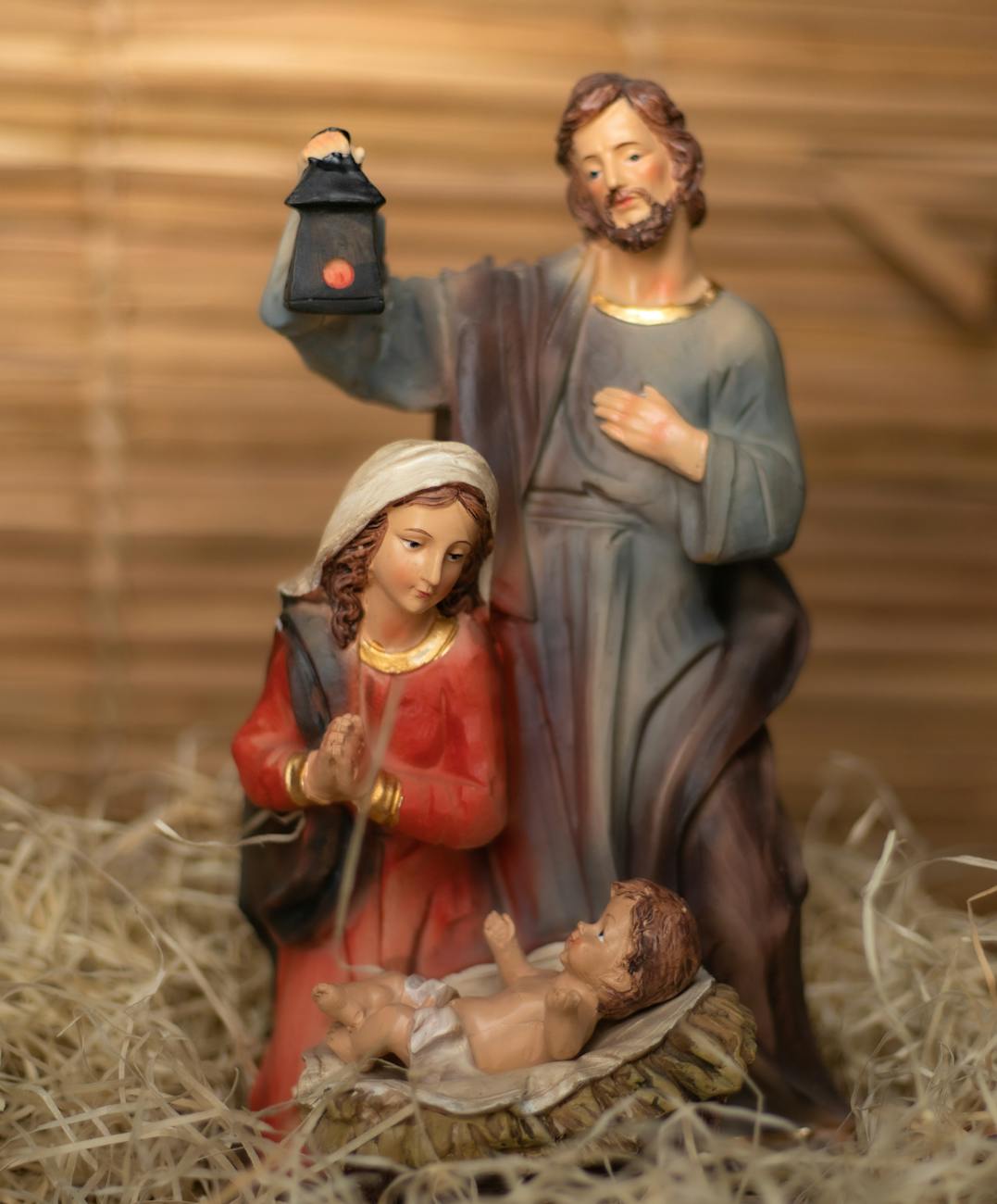
God sent his Son into the World (John 3:17) Photo by Guilman on Pexels.com
Most of my blogs on Civility have been connected to Thanksgiving, Advent and Christmas Day. This was not the original intent of my blogs for this topic. It is, I believe, God’s gift to me as an occasion to learn and grow.
My intention was to write about using the skill of civility to bring back a sense of authentic caring and compassion into relationships. I wanted to present a logical reasoning for us all to reclaim our family and friends’ relationship and bring them back into our daily lives. Instead, during the process of writing, love became one of the main themes.
My first blog on October 16th was written with no political or religious references. It was written to share my reflection on the environment that we as Americans find ourselves. An environment where verbal abuse, physical abuse and threats of death have become normalized by many people.
I am in my mid 70’s and clearly remember the hatred and violence that spread across this country in the 1960s. 1970s and 1980s. I am not surprised that we once again find ourselves facing hatred and violence. I have heard it said, “history mirrors itself” and “history repeats itself.” It’s so true. What has surprised me is the extent to which personal political and religious views have infused themselves into the division we are experiencing today.
I blame a good part of this on technology and social media. Because of the lack of critical thinking so many of us apply to what we hear and read. To the pervasive idea of “me” before anyone to the point that we end up believing “I” am better or more important than “you.” What I find sad about this is that, I believe, most people don’t realize that their words or actions are reflective of this belief.
In writing my second blog in early November I realized we were getting into the holiday season. As I am a Catholic, I decided to use the process of viewing Civility through a spiritual lens. I also included some current and past historical events and biblical stories to highlight certain points.
This final blog on civility is also going to focus on the message of the Christmas Season, the “giving” season.
The birth of Jesus, a gift from God, our Father, to us. The gift of all of us becoming children of God and brothers and sister of Jesus. The gift of being one family with God as the Father. The gift of forgiveness for our transgressions.
It has been my belief that the Old Testament was not written only for the Jewish people. The Jewish people was and is meant to be representative of all people…Jewish and gentile. In several passages in the Old Testament, the writers made a point of commenting on how people from other nations should be welcomed and treated with respect and generosity.
We have entered the Advent Season which is time when we wait with bated breath for the gift from God, the Messiah.
It’s a time when healing our relationship with each other is important. We may need to see this time as returning to God and Jesus the gift of forgiveness, compassion, and generosity. I have experienced the Gospel of Luke as the “good news” of divine love and forgiveness.
There’s a section in Luke’s Gospel when he tells his disciples to hate their father and mother (Luke 14:26). Many people have taken this literally. Some have used it as an explanation to divide families. But if a moment is taken to reflect (by reading further), it is reasonable to understand that Jesus is actually explaining what being a follower means. I mean really, think about it. Why would Jesus tell his disciples to dishonor his parents (the Fifth Commandment of God)?
It was not meant to cause division. It was meant to emphasize the type of commitment required to be a certain type of follower. This particular lesson, as I see it, was to teach the disciples that whichever gift was bestowed upon them by God, were to be used with full commitment.
Here are just a few examples of gifts and what may be needed (used with morals and values that reflect the teachings of Christ:
Pastor/Priest – this may require some to be celibate (Catholic Church). These are needed to spend all their time preaching, teaching and providing whatever assistance is needed by the members of their community. This is not a part time position. This requires the person to give their all to the community (believer and non-believer).
Missionary – this may require a person to fully commit one or more years of travelling to a foreign country to help those in need of specific skills to help their communities. This may include carpentry, farming, education, healthcare, etc.
Teachers and trainers – whether they work in public, private or parochial school system or for a business, must have values and morals that honor all students and employees. That what they teach is accurately based on fact and age appropriate. That they treat each student and staff with respect. They are ready to show compassion and understanding in any situation that arises.
Healthcare workers may have to have a certain amount of objectivity while caring for a patient. They need to still be compassionate with these patients and their families. To do their best not to let their opinions come into play because of physical appearance and become hardened by those opinions.
Business owners need to create an organization that will provide a service and/or product that will be beneficial to the public. That they pay a fair wage and safe working environment. To safeguard from profit becoming more important than people.
As for those who take care of children/elderly, are employed by small or large corporations, who volunteer for any organization, etc. that they show the proper appreciation for what they do. Whether or not they are paid, they are serving others and it should be done with compassion and understanding.
As this to say, that we are surrounded by people who have different views (on any given topic) and chances are that we are surrounded by these same people on daily basis. To honor the gift of God’s love, Jesus, we must find a way to receive this gift with grace and dignity and give it with grace and dignity.
Civility is one of the great gifts to share this holiday season. A perfect gift after several years of division. This year is the perfect time to offer a priceless gift – the gift of love.
Send a text, card or letter during this month. If it’s easier, keep it to two sentences. For example,
“I am remembering the good times we had in the past. Wishing (or praying) you and your family have a happy and healthy holiday (or Christmas) season.”
Note: I personally use the term Holiday Season as not all of my family and friends are Christians. There are different faiths that have special celebrations in December. For example, the Jewish people will celebrate Hanukkah on December 25th. It’s also a time when the Jewish people give each other gifts. Allow each person to use the term which they want without judgment.
It is my hope and prayer that this season brings the necessary strength, courage and faith to each of us to mend/heal relationships. That we have the wisdom to realize that we can recreate loving and respectful communities that is reminiscent of what we learned about Jesus.
Circular shape of the wreath: no beginning, no end of God’s love; eternal love
In the earlier four parts of my blog on the Civility Webinar I took part in I wrote about my personal observations for each section presented by Teresita Scully.
When I first started this series, I did not realize I would finish the last part at the beginning of the Advent Season. But I think it’s a great time to bring the series to a close. (I may add a final epilogue to this after the Holiday Season in early January.)
Adventus, the Latin word for Advent, signifies a sense of coming or arrival. The origins of Advent can be traced back to before the 4th century. By the 4th century written evidence is found in modern Spain and Europe (Hispania and Gaul). (A bit of history: the earliest mention Advent practices came when the Council of Saragossa met {380 AD} to respond to the Priscillianism movement.)
We are in a time when a sense of darkness is prevalent in different ways. Politically, religiously, and culturally we are experiencing strife between families and friends. Advent is a time that many of us reflect on the birth of Christ. The fulfillment of the promise of a Messiah in the Old Testament predicted by the Jewish people. So, today, we celebrate it as a time of waiting for the Light to appear and we use candles to remind of that promise.
There are four candles lit during each Sunday of Advent. The first is Hope (Prophecy Candle), recalling the prophecies in the Old Testament). The second is Faith (Bethlehem Candle) recalling Mary and Jospeh’s journey to Bethlehem. The third is Joy (Shepherd’s Candle) recalling the joy we feel as we anticipate Jesus’ return. The final fourth is Love (Angel’s Candle) recall the angels’ announcement of Christ’s birth.
Why am I connecting civility with the Advent season? These are, again, my own personal insights after reflecting on the promise of the Messiah.
The candles of Advent, Hope, Faith, Joy and Peace should be pillars we use each day of this season (and every day after) for defining how we talk and act with each other.
In the Old Testament hope was one of the major themes of the prophets. It told of a time of peace for all nations. For me this means keeping a loving and respectful relationship with our family and friends.
Religious Jewish leaders and prophets reminded the people to keep their faith by recalling how God faithfully saw them through hard times in the past. This requires keep our faith strong through prayer, meditation, bible study, and connecting with member of your faith community.
Do you know that joy is mentioned 245 times in the Bible (NIV). It is different from happy. I see joy as an emotion that is a part of my heart and soul. Joy sustains me in times of pain and sorrow. It’s God’s gift to me that I can reach for to lift me up and bring peace and acceptance to my heart and mind. Happiness is an emotion that we feel due to outside circumstances and is temporary. (The same for sad. It’s brought on by a painful experience. Again, this is temporary).
Ahh, we come to the hardest of all, love. Actually no, love is not hard to give to anyone/everyone. Some equate loving with the idea that one has to accept a person’s misbehavior or lack of morals, characters, or values. For me love comes from the understanding that we are all children of God. God loves all of us, flaws and all. This does not mean that God accepts behavior that is a result of lack of morals, character, or values. These shortcomings come from the imperfect being that we are. It may be caused by family issues, medical issues or tragedies experienced early in life.
The reality is that there is no real excuse for not loving others. This is especially true if we love God and Jesus.
Now we come to validation. One of the definitions of validation is: “recognition or affirmation that a person or their feelings or their opinions are valid or worthwhile.
When in conversation with anyone, remember that listening to them with an open heart is confirming them as individuals with to have own opinions. They too were given a free will by God to make their own choices in life. Again, you don’t have to agree with them; just honor their right to think individually. Remind yourself of this and being civil during any conversation will be easier and help keep a relationship.
The final section is understanding. There are two different definitions that I want to mention here. One is the noun “an informal or unspoken agreement or arrangement.” The other is the adjective: sympathetically aware of people’s feelings; tolerant and forgiving”
Both are proper for this time of the year. Relationships, in order to flourish, require each of us to treat the other as we want them to treat us. That means approaching each person in every situation with love in our hearts for them. To be generous, kind, compassionate, tolerant and forgiving. When the occasion calls for it, be humble and ask for forgiveness, release the anger, and my favorite, laugh at each other for being so stubborn. It may be one of gifts that you share with the other that allows you both to grow. (I am a firm believer that stubbornness is a negative stance when it causes harm.)
This final part, Validation and Understanding, are not the final steps in healing our relationships. These are just some steps that, hopefully, will lead you to taking the first step in reaching out to your estranged family and friends. YOU are the final step.
Will you trust in God, be humble and let His love be your strength to take that first step? I pray you do.



 Millie Padilla