

In the earlier four parts of my blog on the Civility Webinar I took part in I wrote about my personal observations for each section presented by Teresita Scully.
When I first started this series, I did not realize I would finish the last part at the beginning of the Advent Season. But I think it’s a great time to bring the series to a close. (I may add a final epilogue to this after the Holiday Season in early January.)
Adventus, the Latin word for Advent, signifies a sense of coming or arrival. The origins of Advent can be traced back to before the 4th century. By the 4th century written evidence is found in modern Spain and Europe (Hispania and Gaul). (A bit of history: the earliest mention Advent practices came when the Council of Saragossa met {380 AD} to respond to the Priscillianism movement.)
We are in a time when a sense of darkness is prevalent in different ways. Politically, religiously, and culturally we are experiencing strife between families and friends. Advent is a time that many of us reflect on the birth of Christ. The fulfillment of the promise of a Messiah in the Old Testament predicted by the Jewish people. So, today, we celebrate it as a time of waiting for the Light to appear and we use candles to remind of that promise.
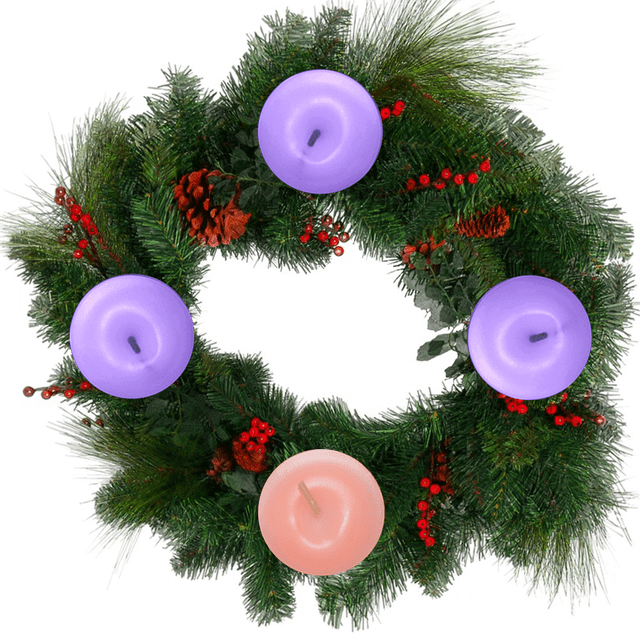
There are four candles lit during each Sunday of Advent. The first is Hope (Prophecy Candle), recalling the prophecies in the Old Testament). The second is Faith (Bethlehem Candle) recalling Mary and Jospeh’s journey to Bethlehem. The third is Joy (Shepherd’s Candle) recalling the joy we feel as we anticipate Jesus’ return. The final fourth is Love (Angel’s Candle) recall the angels’ announcement of Christ’s birth.
Why am I connecting civility with the Advent season? These are, again, my own personal insights after reflecting on the promise of the Messiah.
The candles of Advent, Hope, Faith, Joy and Peace should be pillars we use each day of this season (and every day after) for defining how we talk and act with each other.
- In the Old Testament hope was one of the major themes of the prophets. It told of a time of peace for all nations. For me this means keeping a loving and respectful relationship with our family and friends.
- Religious Jewish leaders and prophets reminded the people to keep their faith by recalling how God faithfully saw them through hard times in the past. This requires keep our faith strong through prayer, meditation, bible study, and connecting with member of your faith community.
- Do you know that joy is mentioned 245 times in the Bible (NIV). It is different from happy. I see joy as an emotion that is a part of my heart and soul. Joy sustains me in times of pain and sorrow. It’s God’s gift to me that I can reach for to lift me up and bring peace and acceptance to my heart and mind. Happiness is an emotion that we feel due to outside circumstances and is temporary. (The same for sad. It’s brought on by a painful experience. Again, this is temporary).
- Ahh, we come to the hardest of all, love. Actually no, love is not hard to give to anyone/everyone. Some equate loving with the idea that one has to accept a person’s misbehavior or lack of morals, characters, or values. For me love comes from the understanding that we are all children of God. God loves all of us, flaws and all. This does not mean that God accepts behavior that is a result of lack of morals, character, or values. These shortcomings come from the imperfect being that we are. It may be caused by family issues, medical issues or tragedies experienced early in life.
The reality is that there is no real excuse for not loving others. This is especially true if we love God and Jesus.
Now we come to validation. One of the definitions of validation is: “recognition or affirmation that a person or their feelings or their opinions are valid or worthwhile.
When in conversation with anyone, remember that listening to them with an open heart is confirming them as individuals with to have own opinions. They too were given a free will by God to make their own choices in life. Again, you don’t have to agree with them; just honor their right to think individually. Remind yourself of this and being civil during any conversation will be easier and help keep a relationship.
The final section is understanding. There are two different definitions that I want to mention here. One is the noun “an informal or unspoken agreement or arrangement.” The other is the adjective: sympathetically aware of people’s feelings; tolerant and forgiving”
Both are proper for this time of the year. Relationships, in order to flourish, require each of us to treat the other as we want them to treat us. That means approaching each person in every situation with love in our hearts for them. To be generous, kind, compassionate, tolerant and forgiving. When the occasion calls for it, be humble and ask for forgiveness, release the anger, and my favorite, laugh at each other for being so stubborn. It may be one of gifts that you share with the other that allows you both to grow. (I am a firm believer that stubbornness is a negative stance when it causes harm.)
This final part, Validation and Understanding, are not the final steps in healing our relationships. These are just some steps that, hopefully, will lead you to taking the first step in reaching out to your estranged family and friends. YOU are the final step.
Will you trust in God, be humble and let His love be your strength to take that first step? I pray you do.
Have a blessed day.
 Millie Padilla